Guide · Buying Process
Buying New Construction in Edmonton
Everything you need before your first builder show-home visit: how incentives actually work, what a build timeline really looks like, what's standard versus an upgrade, and whether you need your own representative (you do, and it doesn't cost extra). Jump to any section below, or read straight through.
Builder incentives & how to negotiate them
Builders offer incentives constantly, but the size and shape of them depends on how close they are to their sales targets for the phase or quarter. Common forms:
- Price reductions — a flat dollar amount off list, most common on spec or quick-possession homes the builder wants off their books
- Upgrade credits — a dollar amount toward options rather than off the purchase price itself
- Closing cost coverage — the builder pays some or all of legal fees, title insurance, or similar costs
- Rate buydowns — the builder subsidizes a lower mortgage rate for an initial period through their preferred lender
The incentive that looks biggest on paper isn't always the best value — an upgrade credit is only worth its sticker value if you were going to buy those upgrades anyway, and a rate buydown's value depends entirely on how long you hold that mortgage term.
Verify before relying on this: incentive structures change monthly and vary by builder, community, and phase. Confirm what's currently on offer directly with the builder or your representative.
Negotiating leverage is highest late in a phase, when a builder has a handful of unsold lots or spec homes and a target to hit. It's lowest at the launch of a new phase, when there's no urgency to move inventory.
↑ Back to topQuick possession & spec homes explained
A spec home (also called quick possession) is a home the builder started building on speculation, without a confirmed buyer, using a standard floor plan and pre-selected finishes. Because construction is already underway or complete, possession can happen in weeks rather than the many months a build-to-order home takes.
- You're choosing from whatever finishes the builder already selected — little to no customization
- The home may already be substantially or fully built, so what you see during your walkthrough is very close to what you'll get
- Pricing is often more negotiable than build-to-order, since the builder has carrying costs on a finished, unsold home
Construction timelines: contract → possession
A rough shape of the process — exact timelines vary significantly by builder, community, and how far into their build queue you are:
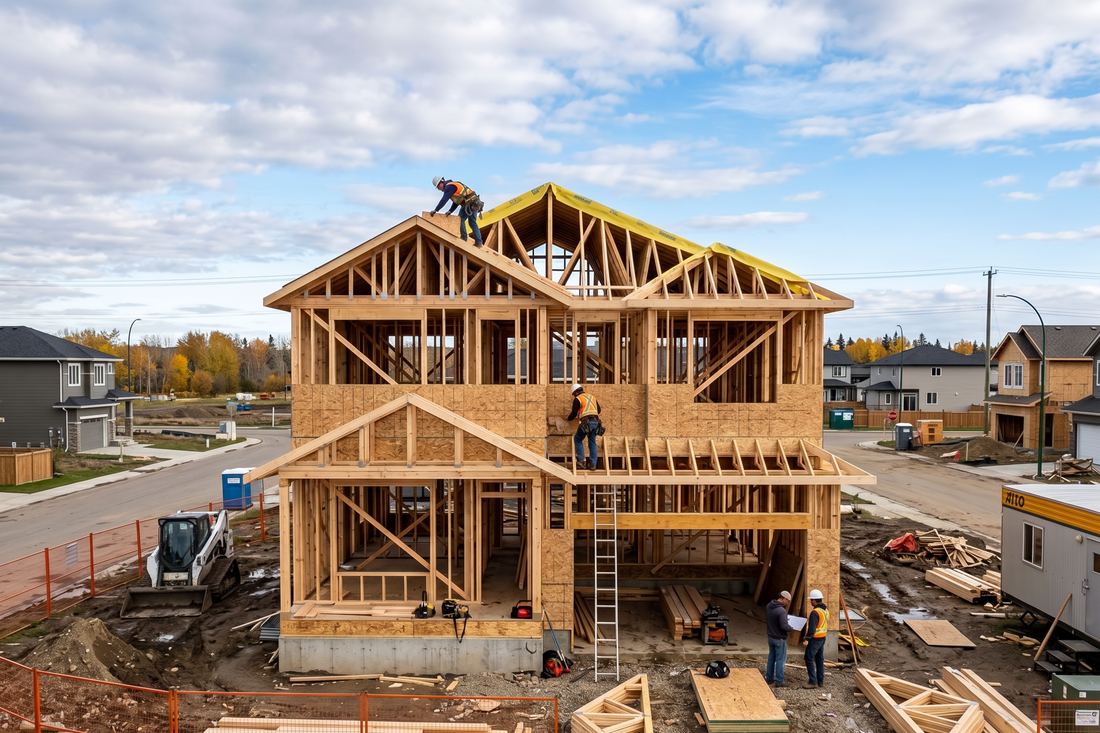
Build-to-order homes commonly run from several months to a year-plus, contract to possession, depending heavily on the builder's current backlog and the season the contract is signed.
Verify before relying on this: get a specific, current timeline commitment in writing from the builder for your specific home and community — don't rely on a general range.
Show home vs. spec vs. build-to-order
Show home
- What it is
- The builder's furnished model, sometimes purchased at end of display life
- Possession speed
- Fastest — already exists
- Customization
- None — sold as-is
- Best for
- Buyers who want to move fast and don't mind a lived-in feel
Spec / quick possession
- What it is
- Built on speculation, standard finishes
- Possession speed
- Fast — weeks to months
- Customization
- None
- Best for
- Buyers who want speed with some price flexibility
Build-to-order
- What it is
- Built to your selections
- Possession speed
- Slowest — months to a year-plus
- Customization
- Full
- Best for
- Buyers with a specific layout/finish vision who can wait
A show home purchase has one wrinkle worth knowing: builders sometimes sell them with a leaseback period, where the builder continues using it as a display model for a set number of months after your purchase closes, in exchange for a rent credit or discount. If a show home is offered to you, ask directly whether a leaseback applies.
↑ Back to topUnderstanding builder contracts & deposits
Builder purchase contracts differ from resale contracts in a few consistent ways:
- Deposit structure is usually staged — an initial deposit at signing, with additional deposits due at set milestones
- Price escalation clauses — some contracts allow the builder to pass through cost increases between signing and possession. Not universal, but not rare — read for this specifically
- Delay provisions — contracts typically specify what happens if possession is delayed, including how long a delay is allowed before you can walk away with your deposit returned
- Specification changes — contracts usually reserve the builder's right to substitute materials of "equal or greater value" if a selected item becomes unavailable
Verify before relying on this: deposit amounts and staging vary by builder. In Alberta, new home deposits are generally protected through the Alberta New Home Warranty Program if the builder is a registered member — confirm the builder's registration and your deposit's protection status before signing.
Have any builder contract reviewed by a real estate lawyer before signing — this is standard practice, not an overreaction, and the cost is small relative to what's at stake. For how your deposit relates to your actual mortgage and down payment, see our financing guide's section on deposit structures.
↑ Back to topUpgrade costs: what's standard, what's extra
Builder base pricing includes a defined standard specification. Everything above that is an upgrade, priced through the design centre, and builder upgrade pricing is consistently higher than retail or third-party pricing for the same finish.
Common high-cost upgrade categories to budget for:
- Flooring upgrades (beyond builder-grade laminate/carpet)
- Countertop upgrades (quartz over laminate)
- Appliance package upgrades
- Basement development — frequently not included, even in homes marketed with basement renderings
- Electrical additions (extra outlets, pot lights, EV charger rough-in)
- Deck, fencing, and landscaping — frequently the buyer's responsibility entirely
Most common budget surprise: basement development. Confirm explicitly whether your quoted price includes a finished or unfinished basement.
Pre-delivery inspection & deficiency lists
Before possession, you'll walk the completed home with a builder representative, the pre-delivery inspection (PDI). This is your opportunity to identify deficiencies before taking possession.
- Bring a flashlight, painter's tape, and your own checklist — don't rely solely on the builder's form
- Test every switch, outlet, faucet, window, and door
- Document deficiencies in writing, with photos, and get the builder's signed acknowledgment before possession
- Understand your builder's process and timeline for completing post-possession deficiency items
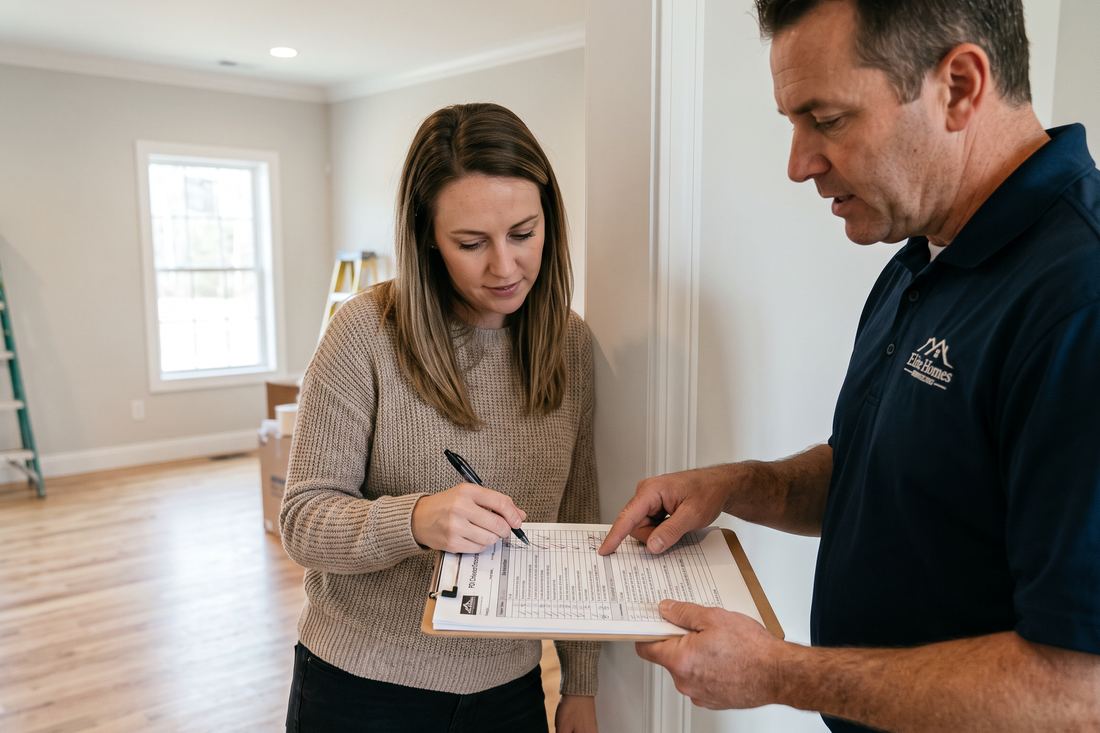
A pre-delivery inspection isn't a substitute for a third-party home inspection, which some buyers arrange separately even on new construction — worth asking about before possession.
For what your warranty actually covers after possession — statutory coverage periods, dollar limits, and how to file a claim — see our new home warranty guide.
↑ Back to topDo you need your own agent?
The person at the builder's show home works for the builder, their job is to represent the builder's interests, including on price, contract terms, and upgrade upsells. That's not a criticism of them; it's simply the structure of the relationship.
An independent buyer's representative works for you instead, and in Alberta new-construction purchases, this typically costs the buyer nothing — the builder pays the representative's commission out of the marketing budget already allocated, regardless of whether you bring your own representation. Choosing not to have your own representative doesn't save you money; it just means nobody in the room is working exclusively for you.
↑ Back to topNew build vs. resale in Edmonton
New construction
- Condition
- New, under warranty
- Customization
- Available on build-to-order
- Timeline
- Weeks (spec) to a year-plus (build-to-order)
- Neighbourhood
- Developing — trees/amenities may lag
Resale
- Condition
- Varies, "as-is" unless negotiated
- Customization
- None — what you see is what you get
- Timeline
- Typically 30–90 days
- Neighbourhood
- Established
Neither is universally better — it depends on your timeline, tolerance for a developing neighbourhood, and whether the certainty of new-home warranty coverage outweighs the value and character often available in an established resale home. For the full comparison — price, negotiation, condition risk — see our new construction vs. resale guide. Already own a home you'll need to sell first? Our guide to selling before buying new construction covers bridge financing and timing.
Ready to see what's actually available? Browse new-construction communities across Edmonton, or jump straight to the full map search.
↑ Back to topCommon questions
Frequently asked questions
Do I have to use the builder's preferred lender or lawyer?
No. Builders often offer incentives, like rate buydowns or closing cost credits, tied to using their preferred lender or law firm, but you're not obligated to use either. Compare the value of the incentive against the cost or convenience of using your own.
Can I negotiate the price on a new-construction home?
Base price on early-phase, build-to-order homes is often closer to fixed, but incentives, upgrade credits, and lot premiums frequently have room to move, especially on spec homes late in a sales phase.
What happens if my possession date is delayed?
Your contract should specify allowable delay periods and what happens if the builder exceeds them, including deposit return conditions. Review this clause specifically before signing, since construction delays are common enough that most contracts build in some allowance.
Is a show home actually a good deal?
It can be, since it already exists and possession can be fast, but confirm whether a post-sale leaseback period applies, and inspect it as carefully as you would any other home.
Do I need a home inspector if the home is brand new?
New doesn't mean defect-free. The pre-delivery inspection with the builder covers visible deficiencies, but an independent inspection is a separate check some buyers choose to arrange, particularly for larger or more complex builds.
Why would I use an independent representative if it doesn't cost extra?
Because the alternative isn't saving money, it's having nobody in the negotiation working exclusively for you. The builder pays the representative's commission either way; the only variable is whose interests that representative is actually protecting.
Is basement development included in the price I'm quoted?
Not always, even when marketing materials show a finished basement. Confirm explicitly, in writing, whether your quoted price includes a finished or unfinished basement before you budget your total cost.
What if I have a home to sell?
That is common, and it is worth planning early. The timing question is how a builder's possession date lines up with the sale of your current home — completion dates can move, and carrying two homes or bridging the gap has a real cost. Start with a free home evaluation so you know what your current home is worth, then read our guide to selling before buying new construction.